



If you own a seasonal or second home, travel frequently, or leave your property unoccupied for extended periods, you may be looking for someone to keep an eye on your home while you are away.
That search can quickly become confusing.
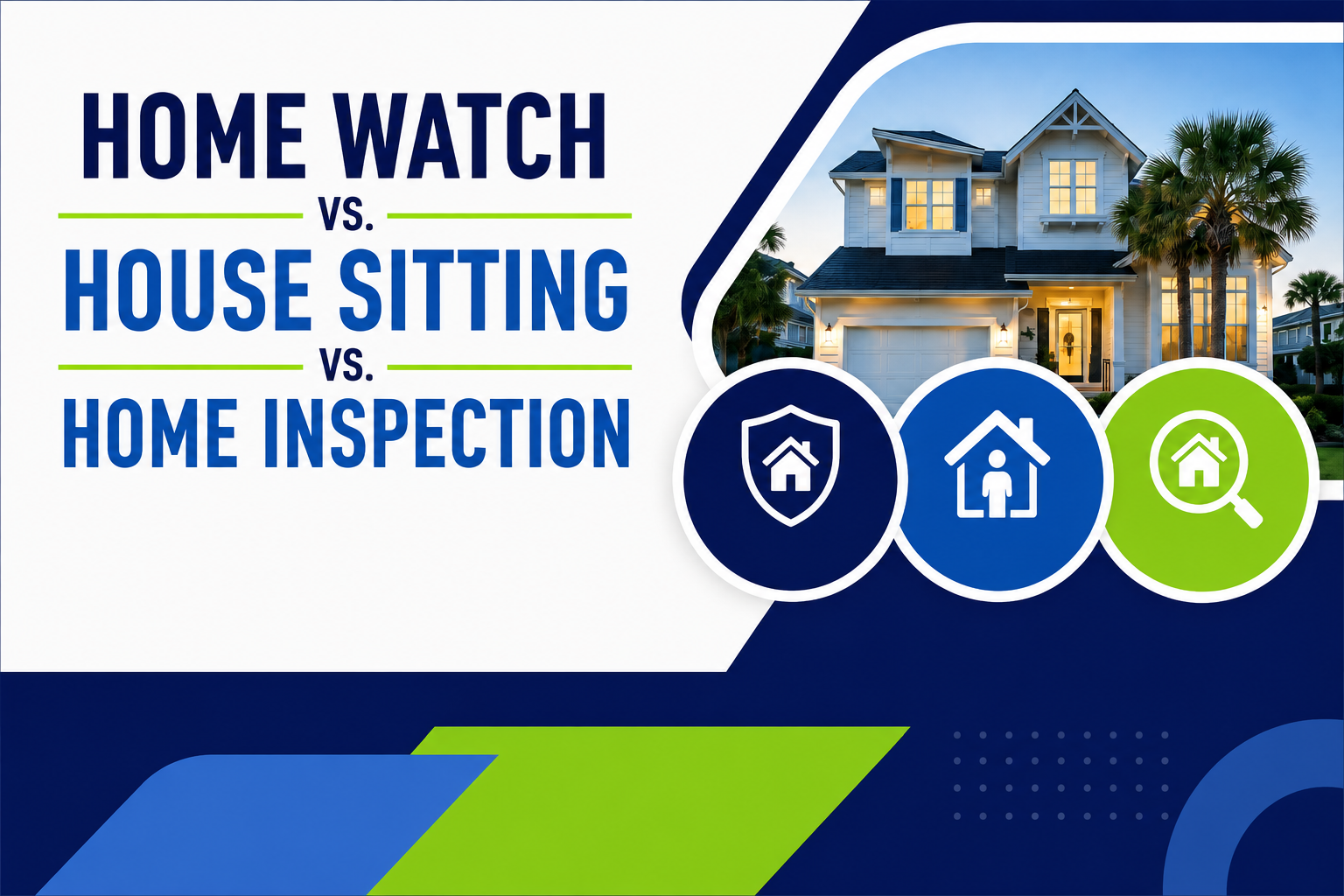
Home Watch. House sitting. Home inspection.
The names may sound somewhat similar, but these are three distinctly different services, with different purposes, responsibilities, training, and expectations.
Understanding the difference is especially important when choosing someone who will have access to your home while you are away.
What Is Home Watch?
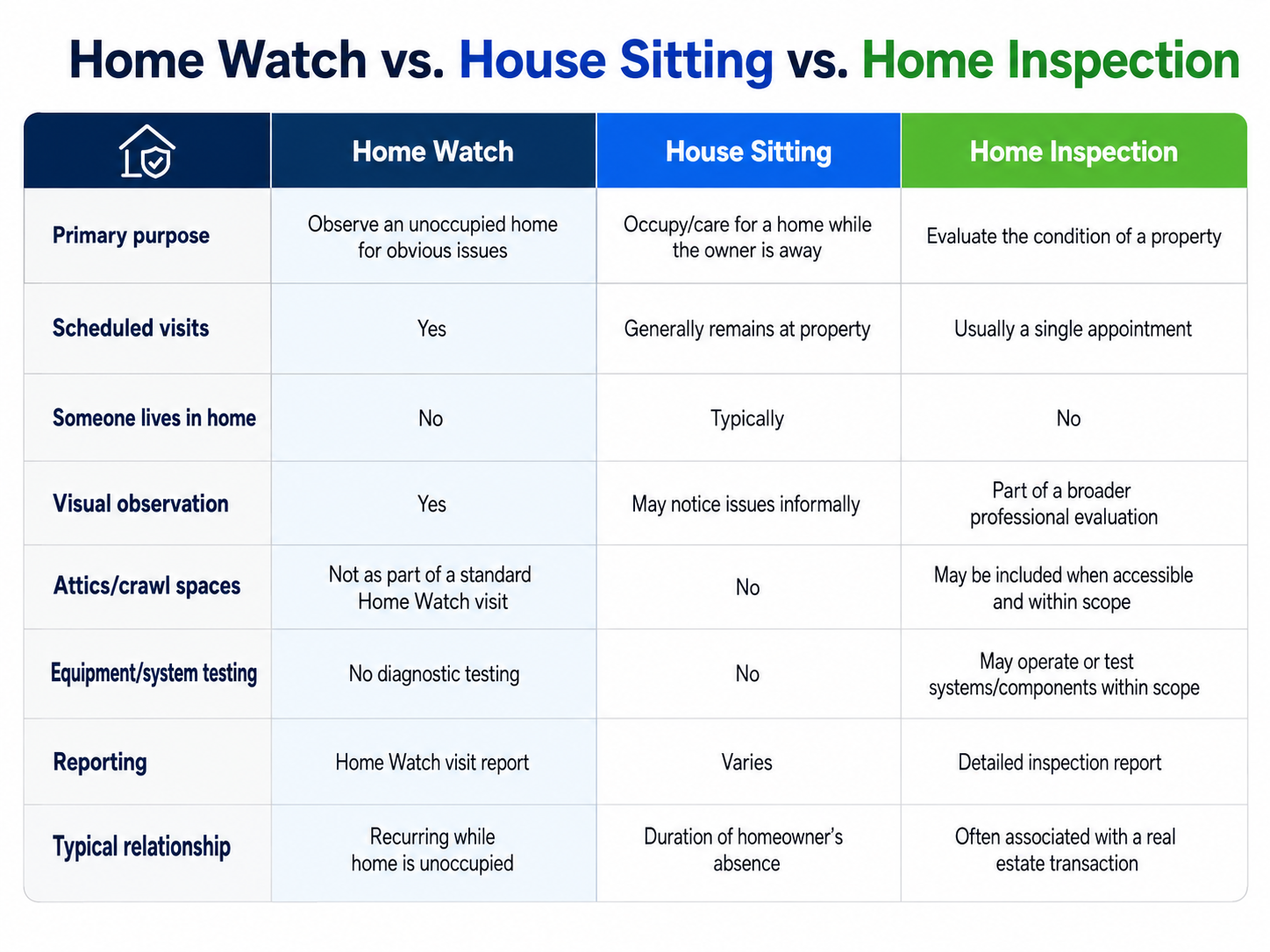
Home Watch is a visual observation of a home or property, looking for obvious issues.
A professional Home Watch Reporter conducts scheduled visits to an unoccupied home, following an established process to observe the property, document conditions, and report findings to the homeowner.
Depending on the property and the agreed-upon services, a Home Watch visit may include visual observations of:
- Interior rooms, ceilings, walls, and floors
- Plumbing fixtures and visible signs of water or leaks
- Air-conditioning operation, temperature, and humidity
- Doors and windows
- Appliances
- Accessible exterior areas
- Signs of pests or unusual activity
- Changes or obvious issues that may require the homeowner's attention
The key word is visual.
A Home Watch Reporter is observing the readily accessible areas and conditions of the home. They are not dismantling equipment, performing diagnostic testing, or conducting a technical evaluation of the property's systems.
That distinction becomes especially important when comparing Home Watch with a professional home inspection.
Home Watch Is Not a Home Inspection
A professional home inspection is a much different service, commonly performed as part of a real estate transaction.
Home Inspectors are trained to evaluate the condition of a property and its systems within the scope of their professional standards and applicable state requirements.
Depending on the property and scope of the inspection, a Home Inspector may:
- Enter attics
- Enter or crawl through crawl spaces
- Examine structural components
- Test electrical outlets and components
- Operate and test plumbing fixtures
- Evaluate heating and cooling equipment
- Examine roofing and exterior components
- Test or operate installed equipment and systems
- Identify deficiencies and document the condition of the property
That is not Home Watch.
During a Home Watch visit, the Reporter is not crawling through a crawl space to evaluate the foundation. They are not entering an attic to assess insulation, framing, or ventilation. They are not conducting diagnostic tests on an HVAC system or evaluating electrical components.
A Home Watch Reporter may observe that something does not appear normal and report that observation to the homeowner. The homeowner and Home Watch Reporter then discuss the situation and determine the appropriate course of action, including which qualified professionals should be contacted.
That boundary matters.
Even the Words Are Different
Professional Home Watch is not simply a shortened or less technical version of a home inspection. It is its own service.
That is why a properly trained Home Watch Reporter understands the importance of terminology.
A true Home Watch Reporter is trained not to use terms such as “inspect” or “inspection” when describing a Home Watch visit, so as not to confuse homeowners. The services, scope of work, and credentials are very different.
A Home Watch Reporter conducts a visit and makes visual observations.
A Home Inspector conducts an inspection.
This may sound like semantics, but it isn't.
Clear terminology helps homeowners understand exactly what service they are purchasing—and what they should expect from the professional providing it.
What About House Sitting?
House sitting serves another purpose altogether.
A house sitter generally stays in or occupies the home while the homeowner is away. Depending on the arrangement, that person may care for pets, collect mail, water plants, take out trash, or handle normal household routines.
Sometimes a house sitter is a paid professional. Other times, it may be a friend, relative, or neighbor.
Home Watch does not require someone to live in the property.
Instead, a Home Watch Reporter makes scheduled visits to an unoccupied home, follows an established process, documents observations, and communicates with the client.
For Seasonal Homeowners and Snowbirds who do not want another person residing in their home, professional Home Watch offers an entirely different solution.
Why Professional Home Watch Matters
When you live in your home, you are constantly observing it without even thinking about it.
You notice when the air feels warmer than usual. You hear an unfamiliar sound. You see water beneath a sink. You notice something on a ceiling that wasn't there yesterday.
When the home is unoccupied, those ordinary observations aren't happening.
Your unoccupied home is a vulnerable home.
Professional Home Watch provides scheduled eyes on the property while you are away.
If an obvious issue is discovered, the Home Watch Reporter documents and communicates it. Depending on the client's instructions and service agreement, the Home Watch company may also assist with access for an appropriate service provider.
The Home Watch Reporter's job isn't to diagnose the problem.
It's to observe, document, and report.
A Neighbor Doing a Favor Isn't Necessarily Home Watch
Many Seasonal Homeowners begin by asking a neighbor, friend, or family member to “check on the house.”
There is nothing wrong with having a helpful neighbor.
But Neighbors Doing Favors and professional Home Watch are not necessarily the same thing.
A professional Home Watch business should have defined procedures, appropriate insurance, written agreements, documentation and reporting practices, and established protocols for what happens when an issue is observed.
A trained Home Watch Reporter also understands the boundaries of the service—including what they should and should not be doing inside a client's home.
Training and Credentials Matter
Because Home Watch involves access to someone's home and the responsibility of observing and reporting conditions while the homeowner is away, professional education matters.
A Certified Home Watch Reporter (CHWR) is a graduate of the Home Watch Academy and is enrolled in continuing education. This is the only industry certification where foundational and continuing education are required in addition to other business credentials.
Trained – Tested – Certified.
Homeowners should feel comfortable asking a Home Watch provider about their training, insurance, business practices, reporting procedures, and exactly what is included in a Home Watch visit.
You can learn more about professional Home Watch services at YourHWP.com and search for a Certified Home Watch Reporter at FindHomeWatch.com.
Which Service Do You Need?
It comes down to the purpose of the service.
If you want someone to live in your home, care for pets, and handle everyday household routines, you may be looking for a house sitter.
If you need someone to evaluate the condition of a home and its systems, including areas and components that may require greater access, operation, or testing, you may need a qualified Home Inspector.
If you want a trained professional to conduct scheduled visits and visual observations of your unoccupied home, document what is observed, and communicate those findings to you while you are away, you are looking for professional Home Watch.
Three different services.
Three different purposes.
And when it comes to your home, understanding the difference matters.
Home Watch is a visual observation of a home or property, looking for obvious issues.



